
Diameter: 2.1 mm, 2.5 mm, 2.8 mm, 3.1 mm, 3.4 mm
Length:
2.1 mm - (22 mm, 25 mm, 27 mm, 30 mm, 32 mm, 35 mm, 38 mm, 40 mm,
45 mm, 50 mm, 55 mm)
2.5 mm - (35 mm , 40 mm, 45 mm, 50 mm, 55 mm, 60 mm, 65 mm, 70 mm)
2.8 mm - (60 mm, 70 mm, 80 mm, 90 mm)
3.1 mm - (80 mm, 90 mm, 100 mm)
3.4 mm - (65 mm, 70 mm, 80 mm, 90 mm, 100 mm, 110 mm, 120
mm)
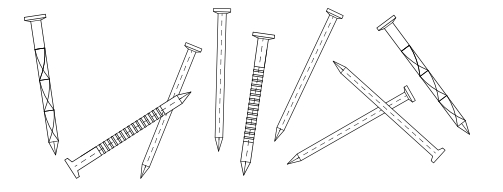
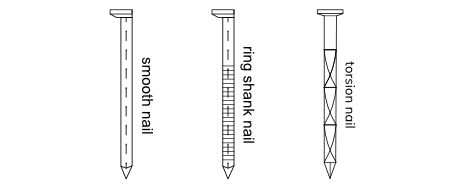
Shank type: smooth, ring, screw
Coating / material type: uncoated steel, electro-galvanised steel, hot-dip galvanised steel, stainless steel
Point type:sharp, blunt or clinch
Packaging:bulk
Additional information: nails with various specifications available on request
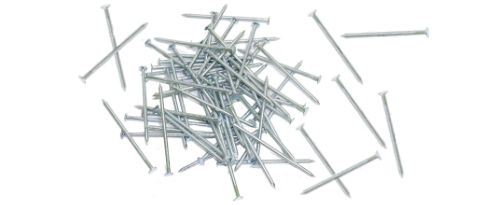
Traditional nails supplied loose are basic and highly versatile
fasteners designed for both machine-driven and manual installation.
They are essential equipment on every construction site, in craft
workshops and for traditional carpentry and joinery work, where
precision and an individual approach to each fastening point are more
important than the high-volume productivity of power tools. Since they
do not require specialised pneumatic or gas-powered equipment, loose
nails provide an economical and reliable solution under all working
conditions.
Loose nails are used extensively in traditional
construction, from erecting timber structures and roof trusses to
installing boarding and formwork, as well as carrying out minor
finishing and garden work. They are also indispensable for repairs,
renovation work and applications in confined spaces where the size of
a nailer prevents precise access with the tool.
Depending
on the characteristics of the designed connections and the required
load-bearing capacity, loose nails are manufactured with a wide range
of shank profiles. In addition to smooth-shank versions, ring-shank
and screw-shank nails are commonly used, significantly increasing the
connection’s resistance to withdrawal and shear forces. To suit
different service environments, the nails are available in uncoated
steel for covered structures, electro-galvanised or hot-dip galvanised
steel for outdoor applications, and stainless steel for the most
demanding and aggressive environments.